Project Archive
Explore our archive of completed research projects on social and environmental sustainability. These initiatives reflect the breadth of our interdisciplinary research and collaborations over the years.
Grid containing content elements
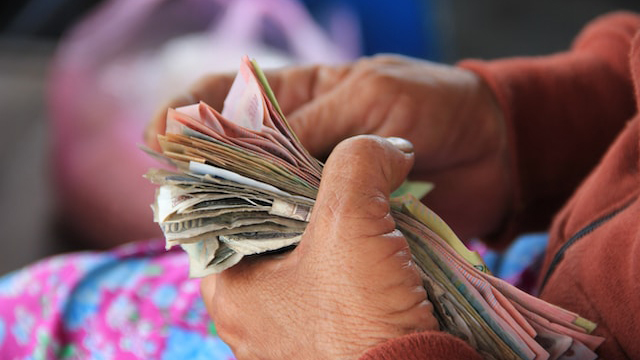
Impact Investing and Financial Inclusion for Development
More about Impact Investing and Financial Inclusion for DevelopmentPast projects ranged from establishing non-financial metrics for financial inclusion markets from both macro and impact investment perspectives, the role of framework conditions for sustainable economic growth of microcredit clients, investor motivations for social impact to de-biasing lending algorithms of microfinance lenders, while balancing social and environmental with financial objectives.

Horizon 2020
The Una Europa Virtual Exchanges for Sustainability (UnaVEx) is an international, interdisciplinary, and intercultural online bridge betwee European and African students for sustainability education.

Algorithmic Bias Assessment and Mitigation in Credit Underwriting
More about Algorithmic Bias Assessment and Mitigation in Credit UnderwritingResearchers Jonathan Fu, Annette Krauss, and Mrinal Mishra partnered with Women’s World Banking and financial institutions in India, Colombia, and Mexico to conduct a technical assistance project, funded by Data.org, Mastercard Center for Inclusive Growth, and The Rockefeller Foundation, to audit credit portfolios for bias and develop an open-source toolkit to assess credit underwriting processes.
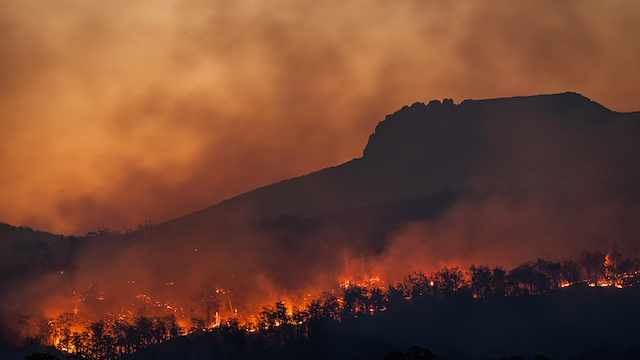
CLIMAFIN
The CLIMAFIN Toolbox is a tool that helps integrate climate-related risks and their impact into standard financial risk measures. It provides metrics to measure these risks and impacts.
Additionally, the toolbox allows users to classify individual projects undertaken by banks, and then determine the overall contribution of the bank's portfolio to either climate adaptation or mitigation, instead of measuring the portfolio's contribution to climate vulnerability.
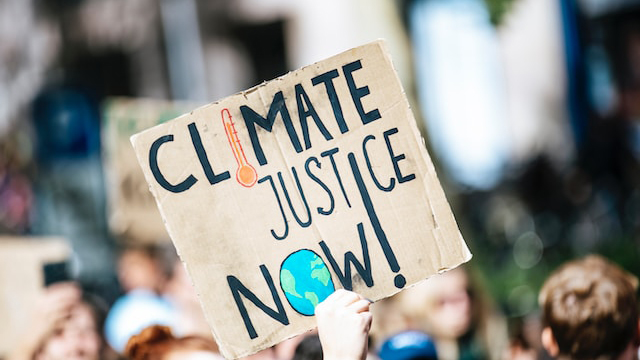
CLIMATE-FEVER & Climatext
CLIMATE-FEVER is a dataset that follows the FEVER methodology and includes real-world claims related to climate change. Each claim is supported by five evidence sentences that have been manually annotated as either supporting, refuting, or lacking enough information to validate the claim.
The dataset comprises over 7,500 claim-evidence pairs and is accompanied by Climatext, which is a dataset used to detect climate change topics based on sentences.
To learn more about the project, you can visit the website of the researchers involved, including Professor Markus Leippold, Thomas Diggelmann, Jordan Boyd-Graber, Jannis Bulian, and Massimiliano Ciaramita.

AGGREGATE CONFUSION
As of today, agencies assign environmental, social and governance (ESG) ratings to firms in order to rate the sustainability of a given firm. Despite providing vital information, the ratings between different agencies diverge substantially. The research project implemented together with MIT Sloan looks at this divergence and asks what could be done about it. For more examples of Professor Chesney’s and team’s work, have a look here.

Integrity Games
Companies often face the challenge in ensuring compliance with codes of conducts and strengthening a value-based and sustainable corporate culture. Integrity games (digital learning games that foster personal integrity) developed and empirically tested in this research project, focus on the promotion of individual competences and complement common practices aimed at the development of more rules and investments in compliance strategies. For more examples of Professor Tanner’s and team’s work, have a look here.
